Stella di Betlemme Study & Formation
Abraham, Father of Many Nations — What Jews, Christians and Muslims Share, and Where They Part
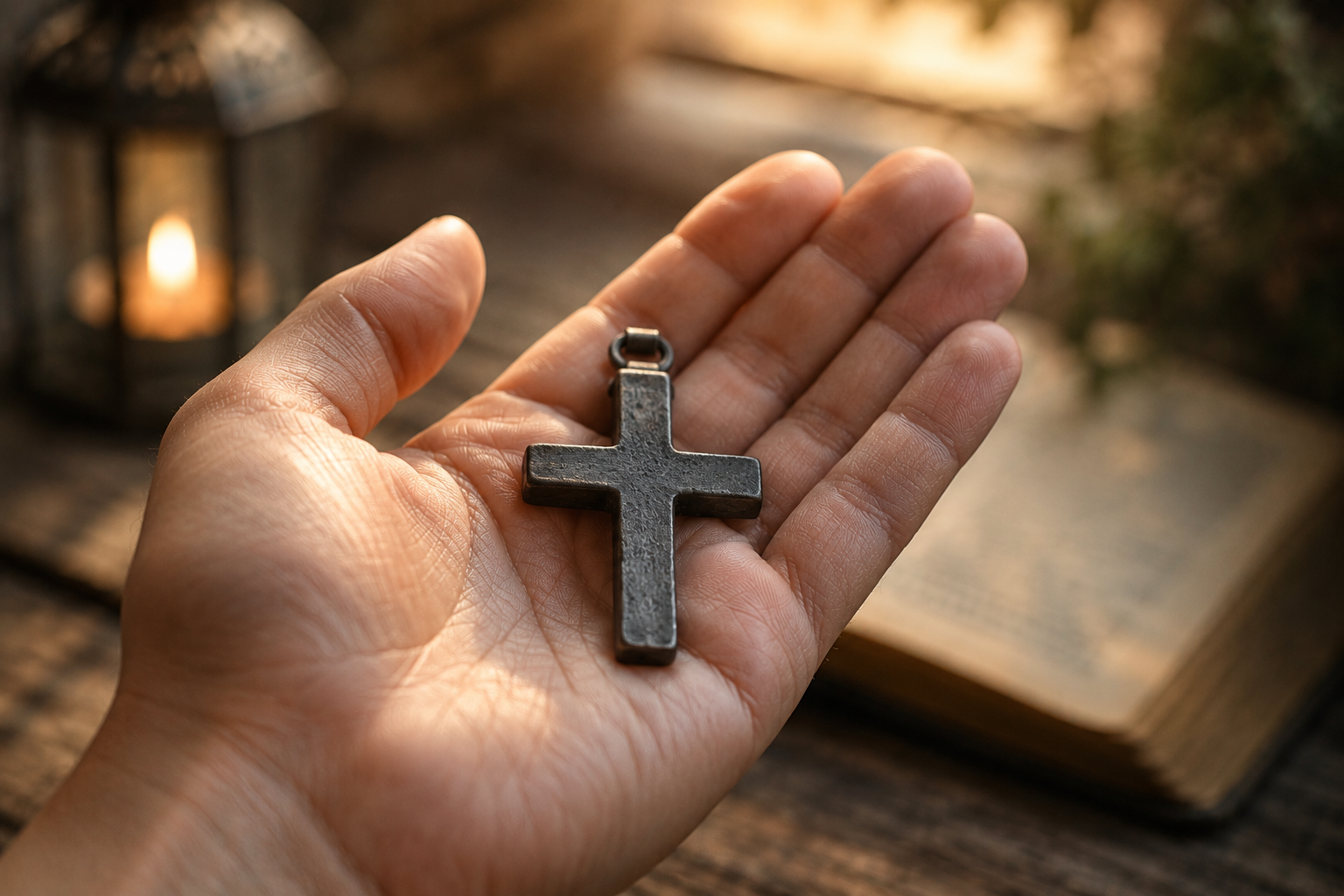
More than half of the human race calls one man father. He owned no land but a burial cave, wrote nothing, founded no city, and died in a tent. Yet Jews trace their people to him, Muslims name him the friend of God, and Christians call him the father of all who believe. If you want to understand why a synagogue, a church and a mosque can stand on the same street and argue about the same God, you begin with Abraham.
A man who left on a promise
The story opens in Genesis 12 with a command and a promise. Go from your country and your kindred and your father's house to the land that I will show you. No map, no reason given. And then the promise: a great nation, a great name, and the line on which everything after it hangs: in you all the families of the earth shall be blessed. Abram, as he was then called, was seventy-five. He went.
The Hebrew word for what he did is not courage but trust, emunah, the root from which we get amen. Genesis 15:6 records the sentence that Paul would later build half a letter on: he believed the Lord, and he counted it to him as righteousness. Nothing had happened yet. Sarah was barren. Abram had no son, no land, no proof. He took God at his word, and God called that being right with him.
He was not a saint in the easy sense. Twice he passed his wife off as his sister to save his own skin. He laughed when God said Sarah would bear a child at ninety. He sent Hagar and her boy into the desert with a skin of water. The Bible does not hide any of it, and that is part of the point: the father of faith was a man who kept walking with his failures on his back.
Two sons, two peoples
Abraham had two sons. Ishmael, by Hagar, Sarah's Egyptian servant, was born first. Isaac, by Sarah, was the child of the promise, born when both parents were past hoping. The rivalry between the two mothers is one of the oldest and most painful stories in Scripture, and God does not take only one side. When Hagar is driven out, the angel finds her by a spring and tells her that her son too will become a great nation. You are a God of seeing, she says, the first person in the Bible to give God a name (Genesis 16:13).
Judaism traces itself through Isaac and his son Jacob, who was renamed Israel. Islam honours Ishmael as the ancestor of the Arabs and holds, in its own tradition, that it was Ishmael, not Isaac, whom Abraham was asked to sacrifice, and that father and son together built the Kaaba at Mecca. Christians read the story through Paul, who in Galatians 4 makes Hagar and Sarah into a parable of two covenants, and through Romans 4, where Abraham becomes the father of all who trust God, circumcised or not, because the promise came before the Law.
The binding of Isaac
Genesis 22 is the chapter none of the three faiths can leave alone. God tells Abraham to take his son, his only son, whom he loves, and offer him on a mountain. Abraham rises early, saddles the donkey, and goes. The boy carries the wood. God will provide the lamb, my son. At the last moment the angel calls out, the knife stops, and a ram is caught in a thicket by its horns.
Jews call it the Akedah, the Binding, and read it on Rosh Hashanah as the supreme act of obedience and the reason God remembers his mercy. Muslims keep it every year at Eid al-Adha, the Feast of Sacrifice, when an animal is offered in memory of Abraham's willingness. Christians have always seen in the son carrying the wood up the hill a picture of another Son, and in the words God will provide the lamb a promise kept on a hill outside Jerusalem two thousand years later. The same chapter, three readings, one God who provides.
What the three faiths share
It is worth saying plainly, because it is more than most people expect. One God, who made the heavens and the earth and is not part of them. A God who speaks, through prophets, and who wrote his will down. A God who makes covenants and keeps them. Reverence for Abraham, Moses, David and the prophets. Prayer at fixed times, fasting, almsgiving to the poor as a duty rather than a kindness, pilgrimage, and the conviction that history is going somewhere and will be judged. The Ten Commandments, whether numbered or not, stand at the moral centre of all three.
Where Christians part from Jews and Muslims
On Jesus. Not on whether he lived, which all three affirm, nor on whether he was born of the virgin Mary, which the Qur'an teaches as clearly as Luke. On who he is. Christians confess that Jesus of Nazareth is the Son of God, that he was crucified for the sins of the world, that he rose bodily from the dead, and that the one God is Father, Son and Holy Spirit. Judaism waits for a Messiah still and does not hold that God has a Son. Islam honours Jesus, Isa, as one of the greatest prophets, denies that he was crucified, and holds that to call him God is to associate a partner with the One who has none.
These are real differences and this church does not blur them. A Christian who says the three faiths are really the same has stopped listening to Jews and Muslims, who would be the first to disagree. But a Christian who cannot say what his neighbours actually believe, in their own words and without caricature, has not understood his own faith well enough either. Abraham's tent had room for guests. The Bible says he ran to meet three strangers, bowed, and fed them under the oaks of Mamre, and that one of them was the Lord (Genesis 18). Hospitality to the stranger is the first thing the father of faith is shown doing after the covenant is cut.
He believed the Lord, and he counted it to him as righteousness. (Genesis 15:6)
Why an independent church says all this
Stella di Betlemme is a Christian church that belongs to no denomination and claims no other church's name. It explains Judaism and Islam for the same reason it explains the Catholic, Orthodox and Protestant traditions: because a reader deserves an honest map. The wise men who followed the star were not from Israel. They were outsiders who paid attention and kept walking. Abraham was one of those too.
— IHS Bethlehem Church. An independent, non-denominational Christian church. Explained here; claimed by no one.
≪ Study & Formation see all Back to the official area To the home page
No comments yet. Be the first.
Comments, Publisher accounts approved by the publisher can post.
Sign in, or if you're new,Register an account (approved by hand).
Sign in AccountRegister apply
※Abuse, spam and offensive posts are removed by the publisher; repeat offenders may be blocked.